Caligula
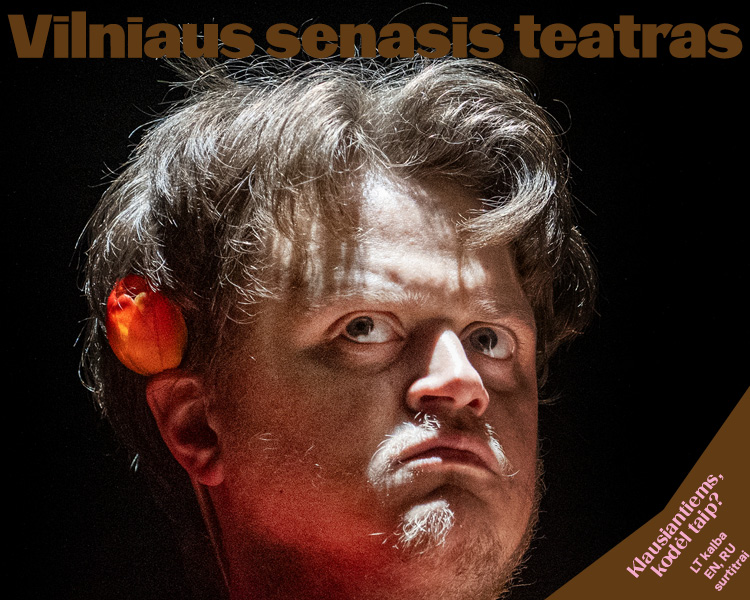
Performed in Lithuanian with English and Russian subtitles. If you want to see the captions clearly, we recommend choosing seats in the stalls from the 7th row.
Although Albert Camus’s play Caligula is based on historical events, it would be inaccurate to classify it simply as a traditional historical drama. Here, the author’s principal aim is to convey, in a distilled form, the core ideas of his philosophy and artistic world view: negation and affirmation, absurdity and rebellion, hope and faith.
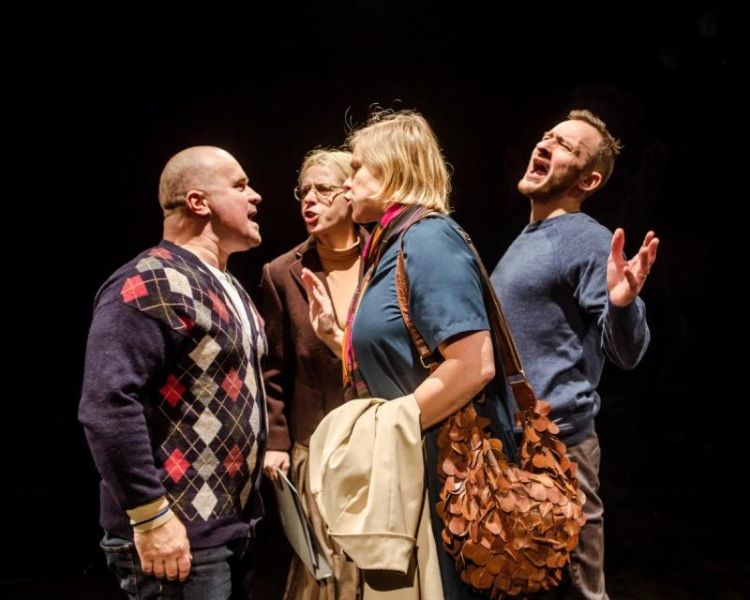
Director Jokūbas Brazys’s interpretation of Caligula, however, is not confined to the image of a half-mad tyrant imprisoning the Roman Empire in his unbridled imagination. Instead, in this version played by Artur Svorobovič, Caligula’s story unfolds in a theatrical universe where anything can become a tool of tyranny: the repertory, the professional limits of fellow actors, and even the official (but non-native) language. In this interpretation, Caligula is less involved in burying his sister Drusilla than in attending the funeral of an already vanished theatre – one that blazes like a flame, still producing characters and stories from tears, blood, and sweat. In this sense, Caligula becomes a reflection on the changing face of theatre and on the actor, forever in search of his own ‘moon’.
More information can be found here.
Other events